Finding an honest SMM panel is becoming more difficult as thousands of platforms promise instant social media growth. Some deliver quality engagement, while others rely on fake promises, poor support, and unreliable services.
How to Purchase Facebook Shares Safely Online
Learning how to purchase Facebook shares can help businesses, content creators, and marketers give selected posts an initial visibility boost.
The process usually involves choosing a trusted social media marketing provider, submitting a public Facebook post URL, selecting a suitable package, and completing the payment.
However, buyers should not focus only on the lowest price or fastest delivery.
Account quality, delivery speed, post privacy, customer support, data security, and realistic expectations should all be considered before placing an order.
What Does Purchasing Facebook Shares Mean?
Purchasing Facebook shares means ordering a specific number of shares for an eligible Facebook post through a social media marketing service provider.
After an order is submitted, participating Facebook accounts may share the selected post according to the service package.
The objective is usually to increase the visible share count, strengthen social proof, or help a post attract more attention.
Businesses may use this service for promotional posts, product launches, event announcements, videos, contests, or time-sensitive campaigns.
A share is different from a like or reaction. A like shows that someone responded to the content, while a share can distribute the post to another location on Facebook, depending on the sharer’s privacy settings.
Purchased shares should be treated as a supporting promotional tactic rather than a replacement for quality content, paid advertising, community engagement, or a complete Facebook marketing strategy.
Why Do People Buy Facebook Post Shares?
Facebook users often judge a post within a few seconds. A post with visible engagement may appear more active than a similar post with little interaction.
This perception can encourage some users to stop scrolling and examine the content.
People commonly buy Facebook shares for several reasons:
- To create initial social proof
- To support a new product or service announcement
- To improve the appearance of an active business page
- To promote competitions, offers, or events
- To strengthen a short-term marketing campaign
- To give an important post more visible engagement
- To test how audiences respond to different content formats
The service may be particularly attractive to new pages that have not yet developed a large organic audience.
Nevertheless, share numbers alone cannot guarantee clicks, sales, followers, or long-term reach.
The next step is understanding the complete ordering process and the information buyers usually need to provide.
How to Purchase Facebook Shares Step by Step
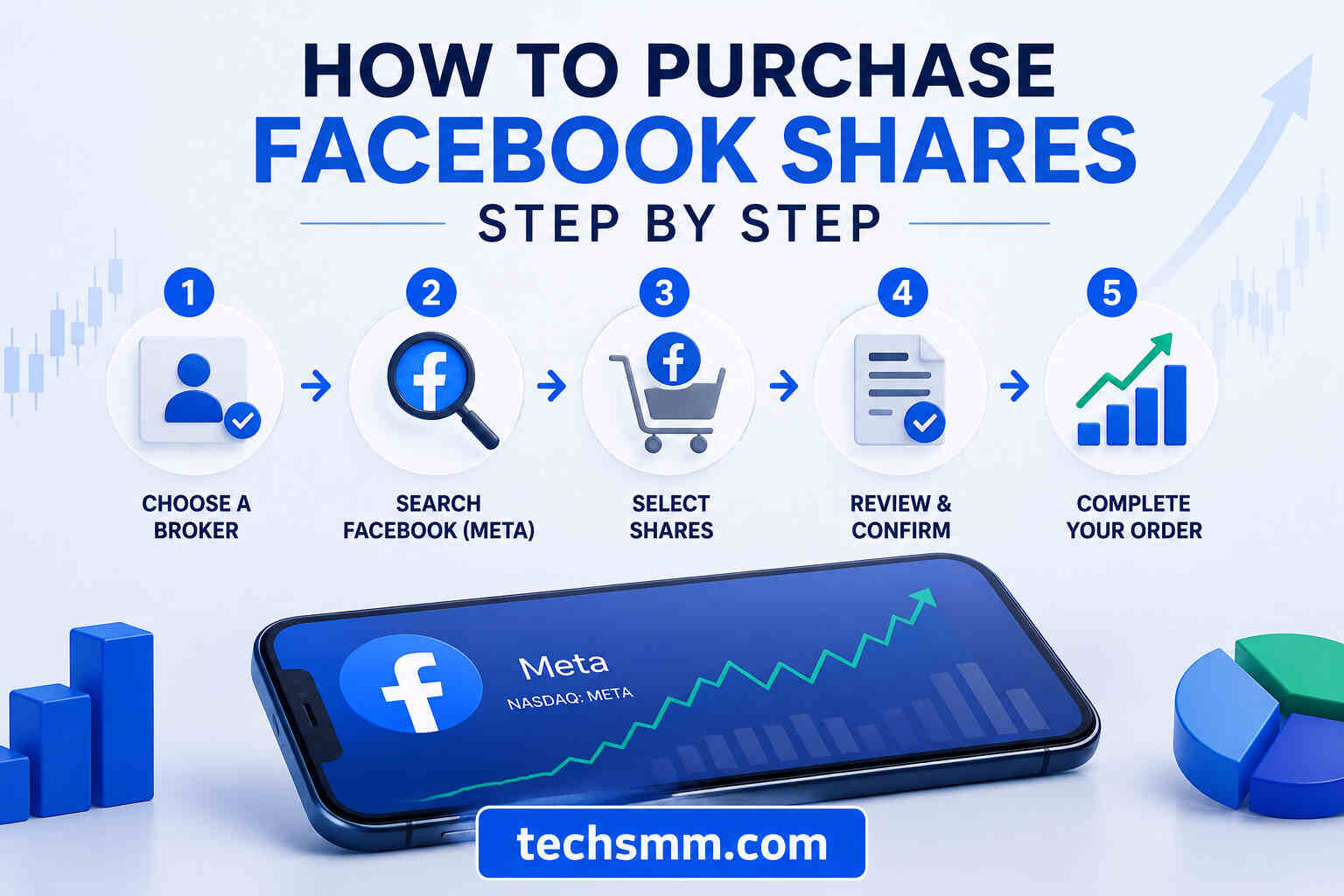
The ordering process can vary slightly between providers, but most platforms use a similar structure. Buyers should review every field carefully because an incorrect link or privacy setting may delay the order.
1. Choose a Reliable SMM Service Provider
Start by selecting a provider that clearly explains its Facebook services, pricing, estimated delivery, refund conditions, and support process.
A professional SMM panel should provide an organized dashboard or order form where customers can select services without sharing their Facebook password.
The platform should also display accurate service descriptions instead of making unrealistic promises.
Before creating an account or adding funds, review:
- Website security
- Available payment methods
- Customer support options
- Minimum and maximum order limits
- Refill or replacement policy
- Cancellation conditions
- Estimated starting time
- Previous customer feedback
The provider should make it easy to understand what will be delivered. Once a suitable platform has been selected, the Facebook post must be prepared correctly.
2. Make the Facebook Post Public
In most cases, a Facebook post must be publicly accessible before a service provider can process its URL.
Meta explains that content shared with the Public audience can be viewed by anyone, including people outside Facebook.
Open the selected post and check the audience icon near the publication date. If the post is restricted to friends, selected users, or a private group, external accounts may not be able to access and share it.
To change the audience:
- Open the Facebook post.
- Select the audience or privacy icon.
- Choose Public when appropriate.
- Save the new setting.
- Open the post in a private browser window to confirm that it is visible.
Avoid changing the post URL or deleting the post after submitting an order. The next step is copying the exact permalink.
3. Copy the Correct Facebook Post URL
Open the individual Facebook post rather than copying the general page or profile address. Select the date or timestamp of the post to open its dedicated page, and then copy the URL from the browser.
A correct order link should lead directly to the specific post that will receive shares. Do not submit:
- A Facebook homepage URL
- A page username without the post ID
- An account login link
- A private preview link
- A shortened link that redirects incorrectly
- A different post from the one you want to promote
Test the copied URL in another browser before placing the order. Once the link works without requiring special access, the buyer can select a package.
4. Select the Facebook Shares Service
Log in to the provider’s dashboard and locate the Facebook services category. Choose a service specifically designed for post shares rather than page followers, reactions, video views, or comments.
Service descriptions may include details such as:
| Service Detail | What to Check |
|---|---|
| Share type | Standard, targeted, real-user, or mixed-source shares |
| Starting time | How soon processing is expected to begin |
| Delivery speed | Gradual or fast delivery |
| Minimum order | Smallest number of shares accepted |
| Maximum order | Largest number permitted per post |
| Refill policy | Whether dropped shares are covered |
| Link requirement | Public post URL or another format |
| Cancellation | Whether an active order can be stopped |
Choose a package that matches the size and normal engagement level of the page. Ordering an unusually large number at once may make the activity appear unnatural.
5. Enter the Number of Shares
Enter the quantity you want to purchase. New buyers should generally begin with a smaller test order rather than immediately choosing the maximum package.
A test order can help evaluate:
- Whether the submitted URL is accepted
- How quickly delivery begins
- Whether the quantity is completed correctly
- Whether the provider communicates order updates
- Whether the engagement remains stable
- How effectively support handles questions
For example, a small local business may begin with a modest quantity for one promotional post. After reviewing the result, it can decide whether the provider is appropriate for future campaigns.
6. Review the Price and Complete Payment
The dashboard should calculate the total price based on the selected service and quantity. Review the order details before paying because some providers cannot cancel an order once processing begins.
A secure platform should not ask for your Facebook password, recovery code, personal messages, or login session. Normally, only the public post URL and order quantity are required.
Available payment methods vary by location and provider. Depending on the platform, buyers may be able to use cards, digital wallets, cryptocurrency, mobile financial services, or an existing account balance.
After payment, save the order number or transaction reference. It may be required if you need to contact customer support.
7. Track the Order Without Editing the Post
Most dashboards display an order status such as pending, processing, in progress, completed, partial, or canceled.
Do not delete the post, change its privacy, or submit the same URL repeatedly while the order is active. These actions may interrupt delivery or create duplicate orders.
Delivery can start quickly, but the exact time depends on the provider, package size, server load, and service availability.
A responsible seller should present delivery times as estimates rather than absolute guarantees.
How to Buy Facebook Post Shares Without Avoidable Risks
The safest buying decision is based on transparency, not exaggerated claims. Providers that promise guaranteed virality, guaranteed sales, or permanent algorithmic advantages should be approached carefully.
Meta identifies fake engagement as behavior that artificially boosts views or engagement to increase distribution. Its policies also prohibit artificial attempts to increase content popularity through inauthentic behavior.
Meta has continued taking action against spammy behavior and coordinated engagement intended to manipulate distribution.
Therefore, no provider can honestly promise that purchased activity is completely risk-free or guaranteed to improve organic reach.
Buyers should follow several precautions:
Never Share Your Facebook Password
A provider does not need account login details to deliver shares to a public post. Requests for passwords, verification codes, cookies, or recovery information should be treated as warning signs.
Avoid Unrealistically Cheap Packages
Extremely low prices may indicate automated, low-quality, temporary, or poorly maintained accounts.
When users search for buy cheap Facebook shares, they should compare quality, support, retention, and delivery method instead of looking only at the lowest cost.
Use Gradual and Proportionate Quantities
The order size should make sense for the page and post. A small page receiving thousands of shares within minutes but almost no reactions or comments may create an unnatural engagement pattern.
Review the Refund and Refill Terms
Read the terms before paying. Some services provide refills only within a limited period, while others exclude Facebook shares from replacement coverage.
Combine Shares With Genuine Marketing
Purchased activity should not be the entire campaign. Use it alongside strong visuals, persuasive captions, audience research, community interaction, Facebook Ads, and consistent posting.
The quality of the underlying post remains important. A weak post is unlikely to produce meaningful results simply because its share count increases.
How to Choose the Best Site to Buy Facebook Shares
The best site to buy Facebook shares is not necessarily the provider offering the largest quantity or the fastest delivery.
A dependable service should balance quality, security, communication, and realistic pricing.
Use the following comparison criteria:
| Evaluation Factor | Positive Sign | Warning Sign |
|---|---|---|
| Service details | Clear requirements and delivery estimates | Vague or copied descriptions |
| Account security | No password required | Requests login credentials |
| Pricing | Transparent cost calculation | Hidden fees after payment |
| Customer support | Accessible ticket or live support | No contact method |
| Order tracking | Visible status and order ID | No record after payment |
| Claims | Realistic promotional benefits | Guaranteed virality or sales |
| Terms | Clear refill and refund conditions | Missing or confusing policies |
| Website quality | Secure, organized dashboard | Broken pages and redirects |
It can also be useful to examine whether the provider maintains a broader and consistently updated service catalog. For example, information about the future of SMM panel services can help customers understand why service quality, automation, security, and platform changes matter when selecting a long-term provider.
Buyers managing several platforms may also review related services such as a cheap SMM panel for Twitter comments or an SMM panel for TikTok monetization. A varied service catalog does not automatically prove reliability, but it can help businesses manage multiple campaigns from one dashboard.
Should You Buy Real Facebook Shares or Cheap Shares?
People searching for buy real Facebook shares usually want engagement from active-looking accounts rather than obvious bots.
However, terms such as “real,” “organic,” “high quality,” and “authentic” are often used differently by different sellers.
Before ordering, ask the provider what its terminology actually means. Determine whether the service includes:
- Shares from active accounts
- Geo-targeted or worldwide profiles
- Gradual delivery
- Visible public shares
- Stable engagement
- A refill period
- Replacement for incomplete delivery
A higher price does not automatically guarantee better quality. Similarly, cheap packages are not always useless. The decision should be based on transparent service specifications, realistic expectations, and a small test order.
The safest approach is to avoid treating any purchased share as equivalent to a voluntary recommendation from a genuinely interested customer.
Can Purchased Facebook Shares Increase Post Reach?
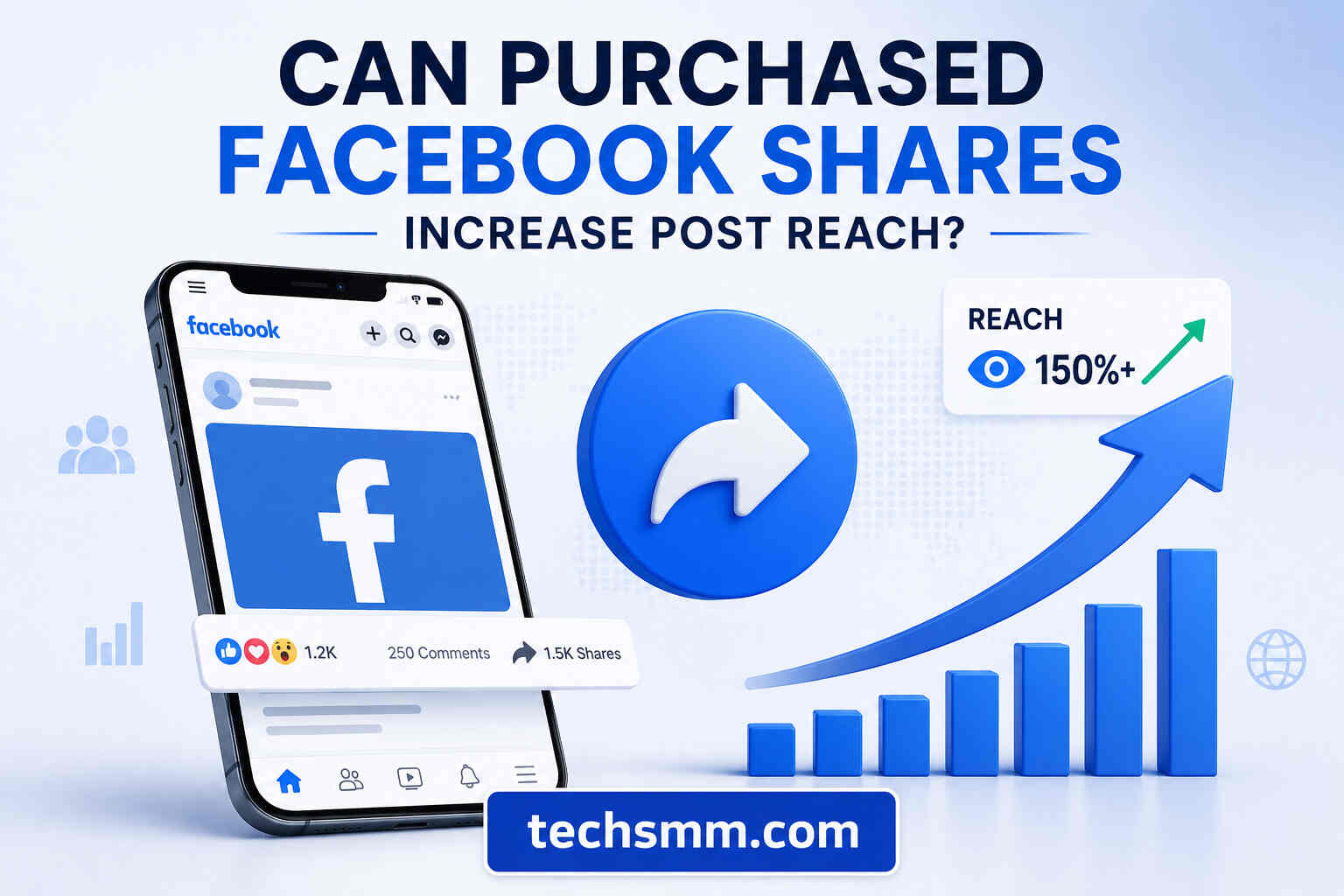
Purchased shares may increase the visible share count and can place the post in additional locations when accounts share it publicly. This could create opportunities for more users to notice the content.
However, purchased Facebook shares cannot guarantee increased organic reach. Facebook considers many signals when distributing content, and the platform does not publish a simple formula that guarantees more reach after a certain number of shares.
The outcome may depend on:
- The quality and relevance of the post
- Audience interest
- Watch time for video content
- Meaningful comments and reactions
- Previous page performance
- Account and content quality
- Posting time
- Competition in the audience’s feed
- Whether the shares reach relevant users
A purchased package may support social proof, but it does not automatically create customer interest.
Businesses should measure website visits, inquiries, conversions, and relevant engagement instead of judging success only by the displayed share count.
Content Practices That Make Facebook Shares More Valuable
Before ordering shares, improve the post itself. Strong content gives both paid and organic viewers a clear reason to interact.
Use a Clear Opening Line
The first sentence should communicate the main benefit, announcement, or problem. Avoid beginning with unnecessary background information.
Add a Strong Visual
Use an image or video that is easy to understand on mobile devices. Keep important text readable and avoid overcrowding the design.
Give Users a Reason to Share
Helpful guides, useful checklists, local information, emotional stories, limited offers, and entertaining videos are more naturally shareable than ordinary promotional posts.
Include a Specific Call to Action
Tell readers what to do next. The call to action might ask them to visit a website, send a message, claim an offer, watch a video, register for an event, or share the post with someone relevant.
Respond to Genuine Engagement
Reply to real comments and questions. Purchased metrics cannot replace human interaction, and active responses can make a business page appear more attentive and trustworthy.
With these elements in place, the share order becomes one part of a wider content-distribution plan rather than an isolated number.
Common Mistakes When Purchasing Facebook Post Shares
Customers often experience disappointing results because they submit the wrong information or choose a service without reviewing its conditions.
Avoid these common mistakes:
- Submitting a private Facebook post
- Copying a page link instead of the post URL
- Ordering before reading the service description
- Purchasing an unrealistic quantity
- Choosing a provider based only on price
- Sharing account login credentials
- Editing or deleting the post during delivery
- Placing multiple orders for the same post simultaneously
- Assuming purchased shares will guarantee sales
- Ignoring Facebook’s authenticity and engagement policies
- Using purchased engagement as a substitute for content quality
A careful buyer checks the link, privacy setting, package specifications, price, and terms before confirming the order.
Final Words
Understanding how to purchase Facebook shares involves more than choosing a package and submitting a link.
Buyers should make the selected post public, copy the correct URL, choose a transparent provider, begin with a reasonable quantity, protect their account credentials, and monitor delivery carefully.
Purchased shares may support the appearance and initial visibility of a Facebook post, but they should remain only one element of a broader strategy.
High-quality content, genuine audience interaction, ethical promotion, Facebook Ads, and consistent page management are still necessary for sustainable growth.
Frequently Asked Questions
Where Can I Buy Facebook Post Shares?
You can purchase Facebook post shares from an SMM service provider that offers a dedicated Facebook shares package. Review its security, service details, delivery estimates, support system, refund terms, and customer feedback before adding funds or placing an order.
Does a Facebook Post Need to Be Public to Buy Shares?
In most cases, yes. The service needs to access the post through its URL, so the post generally must be set to Public. Restricted posts may not be visible to the accounts used for delivery.
Can I Buy Shares for a Private Facebook Post?
Usually, a private post is not eligible because external accounts cannot access or share it. Change the audience setting only when doing so is appropriate for the content and your privacy requirements.
How Long Does Facebook Share Delivery Take?
Delivery may begin within minutes or take several hours, depending on the provider, order size, service type, server load, and current availability. Completion times should be treated as estimates rather than guarantees.
Can I Buy Facebook Shares Instantly?
Some providers advertise fast-start or instant-delivery services. “Instant” generally means that processing begins quickly, not necessarily that the entire order will be completed immediately. Review the estimated start and completion times separately.
Do I Need to Provide My Facebook Password?
No. A standard Facebook post-share order should require only the public post URL and desired quantity. Never provide your password, two-factor authentication code, recovery code, or login cookie to a service provider.
Can Purchased Facebook Shares Increase Post Reach?
They may increase the visible share count and place the post in additional locations, but greater organic reach is not guaranteed. Content relevance, audience response, account quality, and Facebook’s distribution systems still affect performance.
Difference Between SMM and SMO Strategies Explained Now
Social media has become an important channel for building visibility, communicating with customers, generating leads, and promoting products.
However, businesses often struggle to determine whether they need social media marketing, social media optimization, or a combination of both.
The difference between SMM and SMO mainly lies in how each strategy improves a brand’s social media performance.
SMO strengthens profiles, content, discoverability, and organic engagement, while SMM uses broader promotional activities to reach audiences and achieve measurable marketing goals.
What Is SMM and SMO in Digital Marketing?
SMM and SMO are closely connected components of digital marketing, but they perform different functions.
Understanding their individual roles makes it easier to build a social media strategy that attracts attention and converts that attention into meaningful business results.
Before comparing their goals and techniques, it is important to understand what each term actually means.
What Is Social Media Marketing?
Social Media Marketing, commonly known as SMM, is the process of using social media platforms to promote a brand, product, service, event, or message.
It may involve organic content, paid advertising, influencer collaborations, community engagement, promotional campaigns, and social media analytics.
The main purpose of SMM is to connect marketing activities with defined business goals, such as:
- Increasing brand awareness
- Reaching a targeted audience
- Generating website traffic
- Collecting qualified leads
- Increasing product sales
- Promoting an offer or launch
- Retaining existing customers
- Building an active community
Salesforce defines social media marketing as creating and publishing content that builds audience connections, promotes products or services, and helps turn consumers into loyal customers. Adobe similarly explains that SMM connects brands with audiences while supporting wider business objectives.
Businesses may also use a professional SMM panel to manage selected promotional services across platforms such as Facebook, Instagram, TikTok, YouTube, Telegram, and X. These tools should support a genuine content strategy rather than replace audience research, valuable content, or authentic customer communication.
What Is Social Media Optimization?
Social Media Optimization, or SMO, is the process of improving social media profiles, content, publishing practices, and engagement methods so that a brand becomes easier to discover and more attractive to its target audience.
SMO commonly includes:
- Optimizing profile names and descriptions
- Selecting relevant account categories
- Using searchable keywords in profiles
- Improving captions and content formatting
- Adding appropriate hashtags
- Creating consistent visual branding
- Posting at audience-relevant times
- Improving calls to action
- Optimizing links and landing destinations
- Responding to comments and messages
- Reviewing engagement and reach data
SMO is not simply about publishing more posts. It is about making profiles and content more relevant, searchable, useful, and engaging.
Recent optimization guides emphasize thoughtful improvements to profiles, posts, and publishing habits rather than relying on posting volume alone.
Once these definitions are clear, the practical differences become much easier to recognize.
SMM vs SMO in Digital Marketing
Both approaches can increase online visibility, but they differ in scope, execution, cost, speed, and performance measurement.
The following table provides a direct comparison for readers who need a quick answer.
| Comparison Area | SMM | SMO |
|---|---|---|
| Full form | Social Media Marketing | Social Media Optimization |
| Main purpose | Promote a brand and achieve marketing goals | Improve profiles, content, reach, and engagement |
| Strategic scope | Broad marketing discipline | Specialized optimization process |
| Common channels | Organic content, paid ads, creators, campaigns, communities | Profiles, captions, hashtags, keywords, links, formats |
| Traffic type | Organic, paid, referral, and campaign traffic | Primarily organic and referral traffic |
| Typical cost | May require advertising or service budgets | Mainly requires time, tools, research, and expertise |
| Result speed | Paid campaigns can generate faster exposure | Usually develops progressively |
| Main metrics | Leads, sales, conversions, CPC, CPA, ROAS | Reach, engagement, shares, saves, profile visits |
| Content role | Delivers promotional and educational messages | Improves how content is discovered and consumed |
| Funnel position | Can support awareness through conversion | Strongest in discovery, awareness, and engagement |
| Best use | Campaign promotion and measurable growth | Strengthening long-term social performance |
This table gives the basic answer, but businesses must examine the strategic differences before deciding where to invest their time and budget.
What Are the Key Differences Between SMO and SMM?
The key differences between SMO and SMM extend beyond the common claim that one is organic and the other is paid.
A more accurate comparison considers their objectives, activities, resources, timelines, and performance indicators.
Understanding these areas prevents businesses from choosing a tactic that does not match their actual marketing problem.
1. SMM Promotes While SMO Improves
SMM focuses on communicating and promoting a brand’s message to a selected audience. A campaign might introduce a new product, advertise a seasonal offer, generate webinar registrations, or bring potential customers to a landing page.
SMO improves the assets used during that promotion. It ensures the account has a clear description, consistent branding, searchable information, strong captions, suitable content formats, and an understandable conversion path.
In simple terms, SMM creates and distributes the marketing message, while SMO makes the brand’s social presence more capable of supporting that message.
2. SMM Has a Broader Strategic Scope
Social media marketing can include content planning, advertising, influencer marketing, customer communication, lead generation, retargeting, analytics, and campaign management.
Social media optimization is narrower. It concentrates on improving the performance of profiles and content within the wider marketing strategy.
This means SMO can be considered one of the processes that supports effective SMM. Once an account is optimized, promotional campaigns are more likely to send visitors to a trustworthy and relevant social presence.
3. SMO Usually Prioritizes Organic Discoverability
SMO commonly improves organic visibility through profile keywords, content relevance, hashtags, posting consistency, content formatting, and audience engagement.
SMM can also generate organic reach, but it may use paid advertisements, sponsored posts, creator partnerships, or third-party promotional services to expand distribution.
The distinction is therefore not strictly “organic versus paid.” It is more accurately described as optimization versus complete marketing execution.
4. SMM Can Produce Faster Exposure
Paid SMM campaigns can place a message in front of a defined audience shortly after the campaign launches. This is useful for time-sensitive promotions, product releases, limited offers, event registrations, or competitive markets.
SMO normally requires consistent improvement. Search visibility, audience trust, recurring engagement, and profile authority tend to develop over time.
Fast exposure, however, does not guarantee profitable results. The account, message, offer, targeting, and landing experience must still be optimized.
5. They Use Different Performance Metrics
SMM performance is commonly evaluated through business and campaign metrics, including:
- Impressions
- Link clicks
- Click-through rate
- Cost per click
- Leads
- Conversion rate
- Customer acquisition cost
- Revenue
- Return on ad spend
SMO performance is usually measured through content and account-level indicators, such as:
- Organic reach
- Engagement rate
- Shares and saves
- Follower quality
- Profile visits
- Search appearances
- Website link clicks
- Audience retention
- Comment quality
These measurements overlap, but they answer different questions. SMM shows whether marketing activities produce business outcomes, whereas SMO shows whether the social presence is becoming easier to find, understand, and engage with.
Is SMO Organic or Paid?
SMO is primarily considered an organic strategy because it improves existing profiles, content, captions, publishing schedules, audience interaction, keywords, hashtags, and links.
A business may pay an employee, consultant, agency, or software provider to perform optimization, but the resulting visibility is generally not purchased through an advertising auction.
The strategy improves how effectively the account uses its existing social media assets.
SMO may support paid campaigns by improving the profile that users visit after seeing an advertisement.
Therefore, it can influence paid campaign performance even though optimization itself is normally associated with organic growth.
This naturally leads to another common question about whether SMM should be classified as paid or organic.
Is SMM Paid or Organic?
SMM can be both paid and organic.
Organic social media marketing includes publishing educational posts, engaging with followers, sharing videos, responding to comments, running community discussions, and encouraging user-generated content.
Paid social media marketing includes:
- Facebook and Instagram advertising
- TikTok advertising
- LinkedIn sponsored campaigns
- YouTube video promotions
- X promoted posts
- Influencer sponsorships
- Retargeting campaigns
Some online comparisons describe SMM exclusively as paid promotion and SMO exclusively as organic activity.
That explanation is convenient but incomplete. Modern social media marketing covers the complete strategy, while SMO concentrates on improving the accounts and content used within it.
With this distinction established, real-world examples can demonstrate how the two approaches operate.
Practical SMM and SMO Examples
Examples help businesses identify which activity they are currently performing and which part of their strategy may be missing.
Consider an online clothing store preparing to launch a new summer collection.
Example of an SMO Strategy
The business could optimize its Instagram and Facebook presence by:
- Updating its profile description with relevant product terms
- Adding a direct link to the collection page
- Creating consistent cover images and highlight categories
- Writing searchable captions
- Using relevant fashion and location-based hashtags
- Publishing Reels in audience-preferred formats
- Adding clear product-focused calls to action
- Responding to customer questions
- Reviewing which posts receive the most saves and shares
These activities improve how people discover, understand, and interact with the brand.
Example of an SMM Strategy
The same business could then:
- Launch Facebook and Instagram advertisements
- Collaborate with fashion creators
- Promote customer testimonial videos
- Retarget previous website visitors
- Run a limited-time discount campaign
- Publish product demonstrations
- Encourage customers to submit outfit photos
- Measure purchases and campaign revenue
SMM distributes and promotes the offer, while SMO ensures that interested visitors find a professional and relevant account.
The same principle applies to platform-specific campaigns. A creator researching an SMM panel for TikTok monetization still needs original content, audience retention, account compliance, and genuine interaction.
Promotional support may increase initial visibility, but optimization and content quality remain necessary for sustainable performance.
On X, a brand might combine useful discussion threads with a carefully selected cheap SMM panel for Twitter comments to support early conversation.
The campaign must still use relevant comments, realistic expectations, and strong content to attract genuine users.
Benefits of SMO and SMM for Businesses
The benefits of SMO and SMM are strongest when both strategies are connected to customer needs. One improves the brand’s digital foundation, while the other increases communication and distribution.
Their combined benefits can affect every stage of the customer journey.
Benefits of Social Media Optimization
SMO can help a business:
- Build a more professional brand identity
- Improve profile discoverability
- Increase organic content reach
- Create a consistent user experience
- Generate more meaningful engagement
- Strengthen trust before conversion
- Improve website referral traffic
- Understand audience content preferences
- Reduce dependence on continuous advertising
An optimized account also makes it easier for potential customers to identify what the business provides and what action they should take next.
Benefits of Social Media Marketing
SMM can help a business:
- Reach specific customer groups
- Promote products and services
- Generate qualified leads
- Increase campaign visibility
- Test offers and messages
- Retarget interested prospects
- Build customer relationships
- Collect performance data
- Support sales and revenue goals
These benefits show why the decision should not always be framed as choosing one strategy and rejecting the other. The better question is how the two can support the same objective.
How Do SMM and SMO Work Together?
SMM and SMO work together by connecting optimization with promotion. SMO prepares the account and content for discovery, engagement, and trust, while SMM distributes the message and moves the audience toward a marketing objective.
A practical combined process may look like this:
- Define the target audience and business goal.
- Optimize the social media profile.
- Research audience questions and content interests.
- Create relevant posts, videos, and offers.
- Optimize captions, keywords, links, and calls to action.
- Publish content consistently.
- Promote high-potential content through SMM.
- Respond to comments and customer questions.
- Measure engagement, leads, and conversions.
- Improve the next campaign using performance data.
For example, an optimized TikTok profile may clearly explain the creator’s subject and contain a strong content library. SMM activities can then introduce selected videos to more viewers.
Similarly, an e-commerce brand may optimize its Instagram product content before launching retargeting advertisements.
People who click the advertisement will encounter a complete profile rather than an inactive or confusing page.
Technology will continue to make this coordination easier. A well-developed future SMM panel may support improved automation, campaign monitoring, service management, and data-based decision-making.
However, human review remains necessary to protect relevance, authenticity, and brand consistency.
SMO vs SMM: Which Is Better for Your Business?
The answer depends on the condition of the business, its resources, and its immediate objective. Neither strategy is universally better.
SMO is usually the better starting point when:
- The account is incomplete or inconsistent
- Organic reach is declining
- Visitors do not understand the brand
- Content receives limited engagement
- The profile does not generate website clicks
- The business has a limited advertising budget
- Long-term discoverability is the priority
SMM may deserve greater investment when:
- The account and website are already optimized
- The business needs faster audience exposure
- A product or service is ready for promotion
- The company needs leads or sales
- A launch or event has a fixed deadline
- The brand has a tested offer
- Campaign tracking is properly configured
A new business should generally optimize its profiles before spending heavily on promotion. An established business with strong content but limited reach may benefit from expanding its SMM activities.
For many companies, the most effective answer to SMO vs SMM which is better is a planned combination: build the foundation through SMO and accelerate distribution through SMM.
How to Choose the Right SMO vs SMM Strategy
Customers searching for these services are often not interested in technical definitions alone. They want to know where their budget should go and which service can solve their current growth problem.
A practical decision should begin with three questions.
What Result Does the Business Need?
A company seeking immediate product sales may require a conversion-focused SMM campaign. A company struggling with weak profiles and inconsistent engagement should begin with SMO.
The goal must be specific. “Growing social media” is too broad to guide a useful investment.
Is the Existing Social Presence Ready for Traffic?
Promoting an incomplete profile can waste both attention and budget. Before increasing traffic, the business should check its branding, content quality, contact information, links, reviews, calls to action, and recent activity.
If those elements are weak, optimization should come first.
How Will Performance Be Measured?
SMO should be connected to improvements in reach, engagement, profile visits, shares, saves, and organic traffic.
SMM should be connected to campaign outcomes such as leads, sales, customer acquisition cost, and revenue.
Clear measurements prevent businesses from evaluating success only through follower numbers or visible engagement.
Common SMM and SMO Mistakes to Avoid
A strong social media strategy requires more than selecting the right terminology. Poor execution can reduce the value of both optimization and marketing.
Common mistakes include:
- Treating SMM as follower purchasing only
- Assuming SMO means adding hashtags
- Promoting an incomplete profile
- Targeting an audience that is too broad
- Publishing without a content objective
- Using the same content format on every platform
- Ignoring comments and direct messages
- Measuring only likes and follower numbers
- Expecting paid reach to repair weak content
- Changing strategies before collecting enough data
- Using automation without quality control
- Making unrealistic growth or revenue promises
Businesses should prioritize relevance, transparency, audience value, and platform compliance. Marketing tools can support distribution, but they cannot replace a clear offer or a credible brand.
Final Words
The difference between SMM and SMO is best understood through their roles. Social Media Optimization improves profiles, content, discoverability, and engagement, while Social Media Marketing uses content, campaigns, advertising, partnerships, and community activities to achieve broader business goals.
SMO creates a stronger social foundation. SMM uses that foundation to reach audiences, promote offers, generate leads, and support conversions.
A business that combines both can build organic authority while gaining the flexibility to accelerate important campaigns.
The right approach is not to choose between optimization and marketing without context.
Businesses should first identify their goals, evaluate their current social presence, select suitable performance indicators, and then invest in the strategy that solves the most important problem.
Frequently Asked Questions
1. What is the main difference between SMM and SMO?
SMM is the broader process of using social media to promote a brand and achieve marketing objectives. SMO focuses specifically on improving profiles, content, discoverability, user experience, and organic engagement.
2. Is SMO part of SMM?
Yes. SMO can be considered a supporting process within a wider social media marketing strategy. It improves the accounts and content that SMM campaigns use to attract, engage, and convert audiences.
3. Is SMM always paid marketing?
No. SMM includes both organic and paid activities. Organic posts, community engagement, customer communication, advertising, influencer partnerships, and retargeting can all be part of social media marketing.
4. Can SMO increase website traffic?
Yes. SMO can increase referral traffic by improving profile links, content relevance, calls to action, discoverability, and audience engagement. Results usually develop progressively rather than appearing immediately.
5. Which is better for a small business, SMM or SMO?
A small business with a limited budget should usually begin with SMO to establish a credible and discoverable presence. It can then use targeted SMM campaigns to promote proven content, products, or offers.
6. What are common SMM and SMO examples?
SMM examples include paid advertising, influencer campaigns, product promotions, retargeting, and lead-generation campaigns.
SMO examples include profile optimization, caption improvement, keyword placement, hashtag research, content formatting, and publishing-time analysis.
7. How do SMM and SMO work together?
SMO prepares social media profiles and content for better discovery and engagement. SMM then distributes and promotes that content to selected audiences. Performance data from both activities can be used to improve future content and campaigns.
Top 10 SMM Panels for Fast Reliable Social Media Growth
Finding the right top 10 SMM panel options can be difficult because most providers promote similar services, low prices, and fast delivery.
YouTube Shorts Views SMM Panel for Faster Growth
Youtube has thousands of potential viewers within a short period. However, new Shorts often struggle to receive enough initial exposure, even when the content is useful and professionally edited.
Blue Tick Verification SMM Panel Guide for Safe Service
A blue tick verification SMM panel is commonly searched by creators, influencers, public figures, and businesses that want to establish authenticity on Instagram or Facebook.

Genuine SMM Panel Guide for Trusted Social Media Growth
Choosing a genuine SMM panel is not simply about finding the cheapest followers, likes, or views.
Buyers need a platform that provides transparent services, secure ordering, dependable support, reasonable delivery expectations, and clear information before payment.

Famous SMM Panel Guide for Reliable Social Media Growth
Choosing a famous SMM panel can make social media promotion easier for creators, businesses, agencies, and resellers. However, popularity alone does not guarantee dependable services.
How to Use SMM Panel for TikTok Monetization
An smm panel for TikTok monetization may help creators improve the early visibility of selected content, but it cannot directly activate monetization or guarantee approval.
Best SMM Panel Websites 2026
Finding the best SMM panel websites 2026 is not simply about choosing the platform with the lowest prices.
Buyers now compare service quality, delivery speed, refill protection, payment security, platform coverage, and customer support before placing an order.