
Facebook Paid Promotion vs SMM Panel: Key Differences
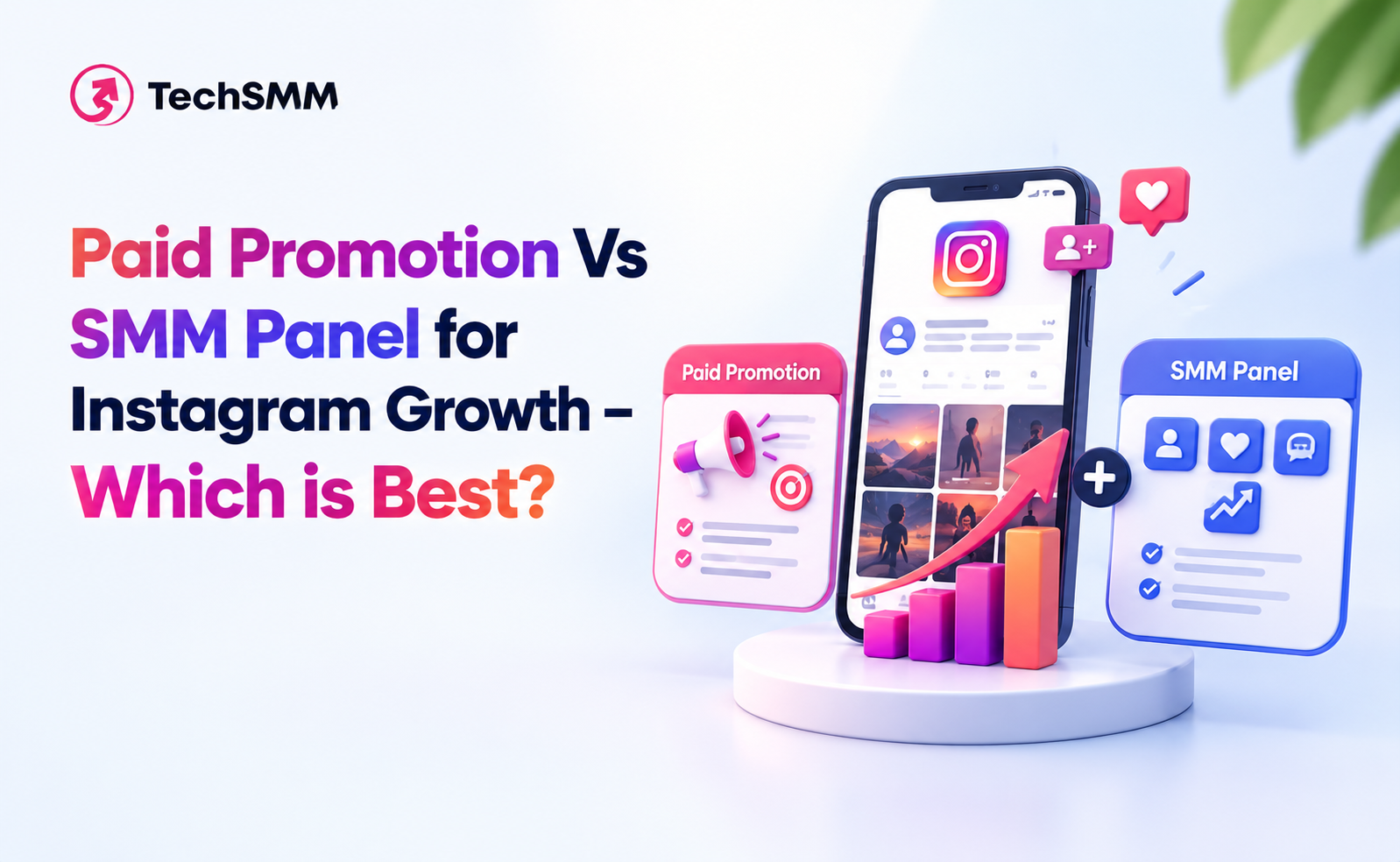
Facebook Paid Promotion vs SMM Panel for Facebook Growth is a question that often comes up when a page is not getting the reach or engagement that was expected. Both options can put money behind your Facebook presence. They do very different things. Facebook Ads helps you show posts or offers to people based on things like location, interests and online activity. An SMM panel on the hand lets you order services such as followers, likes, views or comments.
For page owners posting good content alone does not always bring quick results. That is when paid options start to get attention. Before spending anything it helps to understand what you are actually paying for. This guide compares both options based on cost, targeting, delivery, engagement, tracking and everyday use.
What Is a Facebook SMM Panel?
Facebook paid promotion is when you pay Meta to put your posts or offers in front of a specific group of people, rather than leaving them to reach only your existing followers. You can set this up properly inside Meta Ads Manager, or take the faster route and just boost an existing post straight from your Page.
Unlike buying a set service, Facebook Ads runs on an auction there's no fixed price and no guaranteed outcome. What you get back depends on your audience, the competition you're up against, your budget, and how good the ad itself is.
Building a campaign comes down to five choices:
- Objective: awareness, traffic, engagement, leads, or sales, depending on what you actually want the campaign to do.
- Audience: location, age, interests, behaviors, or a custom audience built from your own customer data.
- Placement : Facebook Feed, Reels, Stories, Marketplace, Messenger, or Instagram.
- Budget: a daily budget, or one total budget that covers the whole campaign.
- Creative: your own images, videos, carousels, and copy, with a clear call to action.
Price is the one thing you don't control. It moves with competition, season, and audience, so a badly targeted campaign can burn through its budget and return nothing.
What you do get in return is visibility. Meta requires a payment method, a Page and a Business Manager account to run most campaigns. Once a campaign is live Ads Manager shows you how it’s performing reach, clicks, engagement and more so you're never left wondering where the money went. With the Meta Pixel or Conversions API in place you can trace a sale back to the ad that made it happen.
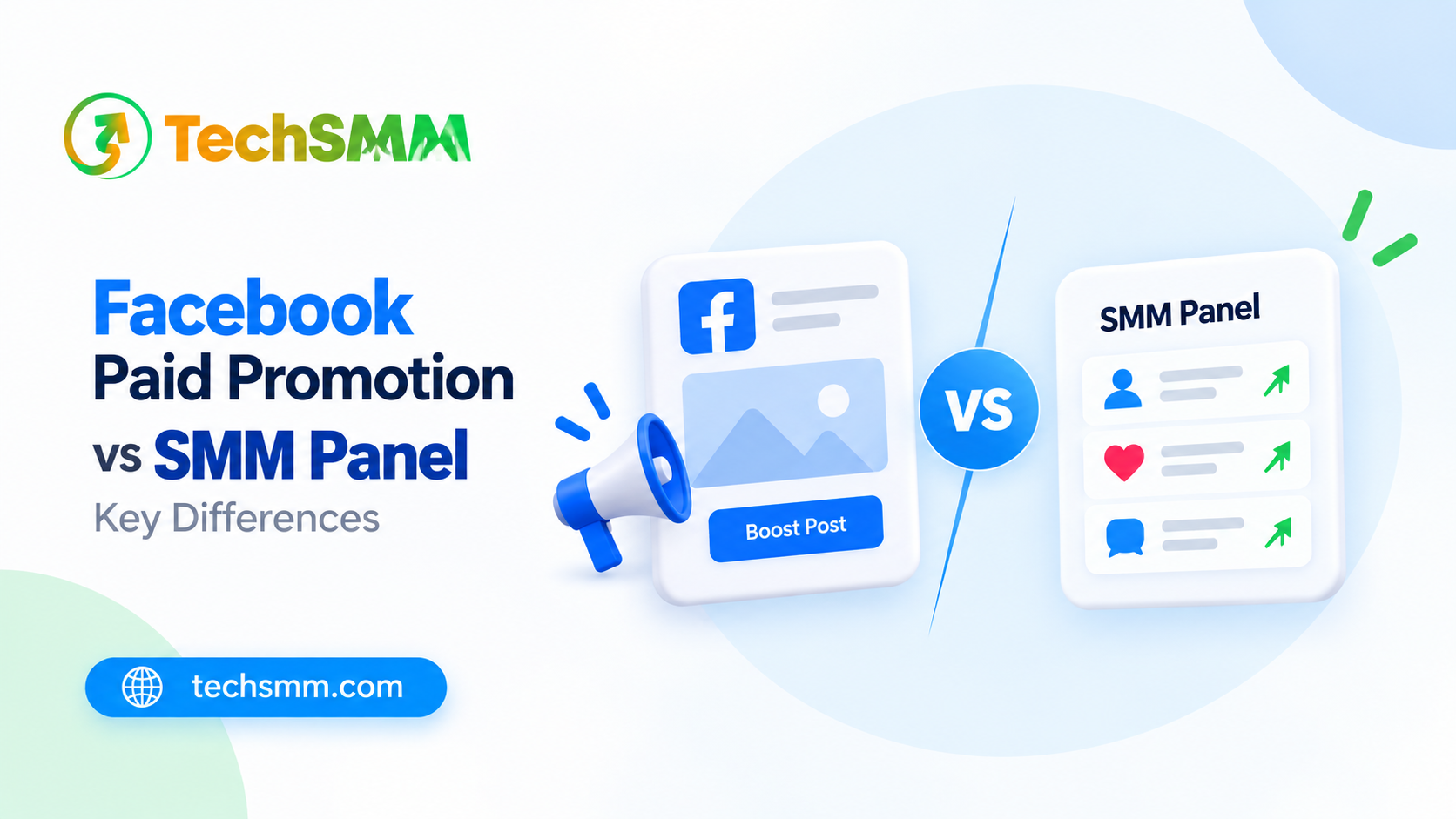
Facebook Ads vs SMM Panel: Quick Comparison
Facebook Ads and SMM panels both involve spending money on Facebook growth, but that is where most of the similarity ends. Ads are built around reaching an audience, while an SMM panel lets you order a specific social media service.
The main difference is what you are paying for. With Facebook advertising, you pay to put content in front of an audience. With an SMM panel, you pay for the service listed in the package.
Key Differences Between Paid Promotion and SMM Panels
Looking only at price can make Facebook Ads and SMM services seem easy to compare. In practice, the bigger differences are targeting, delivery, control, and what you can learn from the results.
Audience Targeting
Facebook Ads gives you plenty of control over who sees your promotion. You can narrow the audience by location, age, interests, and other available targeting options. This is especially useful for businesses that only want to reach a certain type of customer.
For example, a local business may care more about reaching people nearby than getting attention from users in different countries.
With an SMM panel, you usually choose from the targeting options already available with the service. These may include:
- Worldwide services
- Country-specific options
- Different service quantities
- Different delivery speeds
The exact choices depend on the provider and package. Compared with Facebook advertising, though, you generally have less control over who is behind the delivered engagement.
Cost and Budget
There is no standard price for Facebook advertising. Costs can change depending on the audience, competition, campaign goal, placement, and several other factors.
You do have control over how much you spend. Meta lets you set a daily or lifetime budget, and you can adjust or stop a campaign when needed.
SMM panel pricing tends to be simpler. You choose a service and quantity, and the price is shown before you place the order.
The two pricing models are therefore quite different:
- Facebook Ads: You set an advertising budget, but the cost of individual results can vary.
- SMM panel: You usually pay a listed price for a set quantity.
- Ads: Spending is tied to campaign delivery.
- Panel services: Spending is tied to the service you order.
Price alone does not tell you which offers more value. A website click, lead, follower, or video view serves a different purpose.
Reach and Delivery
Facebook Ads delivers your promotion while the campaign is active. Your budget, audience, placements, and schedule all affect how many people Meta can reach.
SMM panels work through individual orders. If you order followers, likes, or views, the service is delivered according to the package terms.
Delivery may depend on:
- The service you select
- The quantity ordered
- The listed start time
- The expected delivery speed
This makes SMM services easier to understand in terms of quantity. Facebook Ads is different because the focus is on distributing content to an audience rather than delivering a fixed social metric.
Engagement
Engagement can look similar on a Facebook post even when it comes from very different sources.
With an engagement ad, Facebook shows your content to an advertising audience. People who see it can react, comment, click, watch the video, or simply move on.
An SMM panel starts from the service you want. Depending on the provider, you may find options such as:
- Post reactions
- Comments
- Video views
- Reels views
- Page followers
When reviewing Facebook growth, avoid looking at one number in isolation. Comments, messages, repeat visitors, watch time, website clicks, and conversions can give you a wider picture of how people respond to your content.
Control and Tracking
Tracking is where the difference becomes particularly clear.Facebook Ads Manager gives advertisers access to campaign data while an ad is running. Depending on the campaign, you can review metrics such as:
- Reach and impressions
- Clicks
- Frequency
- Cost per result
- Engagement
- Campaign spending
You can then use that information to adjust the campaign.
An SMM panel dashboard is usually more focused on delivery. It may show the order status, start count, quantity, and refill information when the service includes one.
Both provide tracking, but they track different things. Ads Manager helps you understand campaign performance, while an SMM dashboard mainly helps you follow the progress of the service you ordered.
Benefits and Limitations of Both Options
Facebook paid promotion is useful when you need control over who sees your message. It can support goals such as local awareness, website traffic, lead generation, product promotion, or sales. The reporting also makes it possible to compare campaigns and learn from the results.
It is not automatic, though. A good budget cannot fix an unclear offer or weak creative. New advertisers also need time to understand audiences, campaign objectives, and performance data.
SMM panels are simpler from an ordering point of view. Services and prices are normally listed in the dashboard, so users can choose what they need without building an advertising campaign. They may also offer several Facebook engagement services in one place through a Facebook SMM panel.
The trade-off is less control over the audience and less information about what happens after delivery. Quality, retention, targeting, and refill conditions can also vary from one service to another. Reading the service details before ordering is important.
Which Option Fits Your Facebook Growth Goals?
There is no reason to treat every Facebook page as if it has the same goal. A local business trying to generate bookings has different needs from a creator trying to get more people to watch a Reel.Start with the result you need, then look at which approach is actually designed to support it.
Brand Awareness and Sales
For businesses, audience relevance matters. A restaurant may want to reach people within its delivery area, while an online store may care about website visits and purchases.Facebook advertising gives businesses tools to build campaigns around those goals. They can promote an offer to a selected audience and measure actions such as clicks, leads, or purchases when the right tracking is in place.
Visible page metrics can still influence how a brand looks, but they should not be confused with sales performance. A business needs to know whether its marketing is bringing people closer to becoming customers.
Content Reach and Engagement
Creators usually want more people to discover and interact with their content. Facebook Ads can be used to give a post, video, or Reel additional distribution beyond its existing organic audience.SMM engagement services approach the same visible metrics from another direction. Instead of promoting the content to an advertising audience, the user orders the required service directly.
Neither approach removes the need for good content. If people reach a page and find nothing worth watching, reading, or sharing, increasing the initial numbers will only go so far.
New Page Visibility
Starting a Facebook Page from zero can feel slow. There is little activity, few followers, and not much history for a new visitor to look through.Before paying for growth, make the page worth visiting. Add the important business information, publish several useful posts, use clear images, and make it easy for visitors to understand what the page is about.
From there, paid promotion can introduce the content to a relevant audience. If you are considering an SMM service for a new page, check exactly what the package provides rather than judging it only by quantity or price.
Can You Use Facebook Ads and SMM Services Together?
Yes, they can be used at the same time, but it is important to keep their roles clear. Facebook Ads can handle audience reach, traffic, leads, or other campaign goals. An SMM service delivers the specific Facebook metric included in the order. One should not be used as proof that the other is performing well.
For example, if you run an advertising campaign while also ordering engagement, a rise in total reactions does not automatically mean the ad produced them. Keep advertising results, organic performance, and third-party services separate when reviewing your data.
For many businesses, Facebook organic and paid growth already work well together. Organic content, including strategies designed to increase Facebook Reels views, builds the page over time, while advertising can help selected posts or offers reach more relevant people.
What to Consider Before Spending Money
Decide what you want before deciding where to spend.If you need leads, website visits, bookings, or sales, make sure you have a way to measure them. If your goal is reach or engagement, decide which numbers actually matter to you.
Also look at the page itself. Paid traffic is less useful when visitors arrive at an incomplete profile, outdated information, or content that does not explain what the business offers.When using Facebook Ads, think about the audience, creative, objective, and budget together rather than focusing on only one setting.
For an SMM service, read the description before ordering. Check the expected delivery, refill terms, targeting information, and support options. Similar-looking services can have different conditions.
Most importantly, know what you are paying for. A low price is not good value if the result has little connection to your actual goal.
Final Thoughts
Facebook paid promotion vs SMM panels are two different ways of spending money around Facebook growth. Paid promotion is mainly about distribution. You choose an audience and campaign goal, Meta delivers the ads, and you review the results through its advertising tools.
With the best Facebook SMM panel, the process is service-based. You select followers, likes, views, comments, or another available service and place an order for a chosen quantity. Rather than asking which one is simply better, start with the outcome you need.
A business looking for sales, a creator looking for content reach, and a new page looking for visibility are solving different problems. Once the goal is clear, the differences in cost, targeting, tracking, and delivery become much easier to judge.
Frequently Asked Questions
What is the main difference between Facebook paid promotion vs SMM panel?
I see that Facebook paid promotion helps me promote content to an audience that I choose based on location, interests and demographics. With an SMM panel I order a service such as followers, likes, comments or views. The biggest difference is in targeting and in how results are tracked.
Is Facebook paid promotion for small businesses?
Yes, especially when a business serves an area or customer group. I can set my budget and narrow the audience instead of promoting to everyone. For example a local shop could focus its Facebook Ads on people living nearby. How well the campaign performs still depends on the offer, content, audience and setup.
What services does a Facebook SMM panel provide?
It depends on the panel. I often find that a Facebook SMM panel provides Facebook followers, page likes, reactions, comments, shares, video views and Reels views. Some packages also come with location options or a refill period. I recommend checking the service details as delivery and conditions can differ between packages.
Can Facebook Ads help reach an audience?
Yes. This is one of the reasons businesses use Facebook Ads. I can narrow my audience by location, age, interests and other available options. Meta also provides tools for reaching people who have previously interacted with my business.
Can paid ads and SMM services be used together?
I can use both. It is better to keep their results separate when checking performance. A Facebook Ads campaign tells me what happened through paid advertising while an SMM order relates to the service I purchased. Mixing the two can make it difficult to see where changes in reach or engagement actually came from.
How can I track Facebook promotion results?
Start with Meta Ads Manager. It shows figures such as reach, impressions, clicks, frequency and cost, per result. If my Facebook Ads send people to a website additional conversion tracking can help me see what they do after clicking. For Page posts and organic performance I can use Meta Business Suite.