
Reseller Panel vs Main Panel: Key Differences Explained
The social media marketing panel market can be hard to understand because many websites offer services for Instagram, Facebook, TikTok, YouTube, or Telegram at different prices. Some of these websites act as suppliers, while others are resellers. Understanding Reseller Panel vs Main Panel can help you see how pricing, service sources, order handling, and customer support may differ.
Knowing the difference between a reseller panel and a main panel also makes it easier to choose the right option for your needs. A main panel usually connects directly with the service provider, while a reseller purchases services from one or more providers and sells them to customers. Neither option is always better. What matters most is service quality, pricing, support, and overall reliability.
What Is a Main SMM Panel?
A main SMM panel, sometimes called a main provider panel or SMM provider, generally sits higher in the service supply chain. It may manage service sources, connect directly with suppliers, maintain API infrastructure, or provide services to other SMM panels. Main panels often focus on wholesale pricing, high order volumes, API integrations, and reseller relationships.
The term “main panel” is not an official certification. A website can call itself a main provider without directly controlling every service it offers. Buyers should look beyond the label and check the actual service terms, pricing, API features, support, and overall reliability before choosing a panel.
What Is a Reseller SMM Panel?
A reseller SMM panel gets some or all of its services from another provider and sells them to its own customers. It can connect with the provider through an API, allowing customer orders to be sent automatically. Order updates then appear in the reseller’s dashboard.
Resellers can focus on pricing, customer support, payment options, and service selection without managing every service directly. Some work with one provider, while others use several providers for different services. The quality of a reseller panel depends largely on the services it chooses and how well it manages customer orders.
Main Panel vs Reseller Panel at a Glance
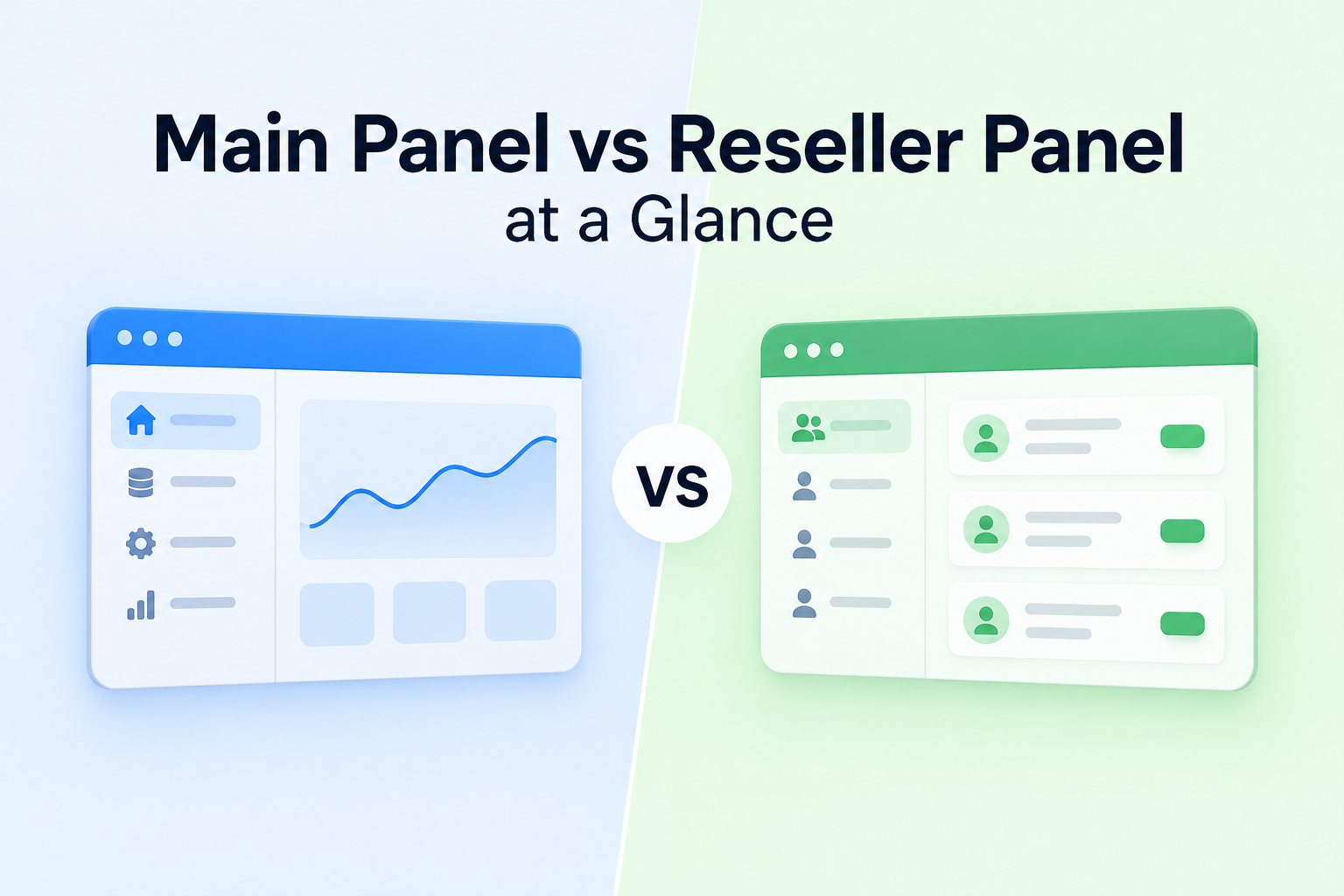
A main panel usually works closer to the service source and may offer lower base rates, more control over orders, and API access for resellers. This setup can be useful for agencies, resellers, and businesses that place a large number of orders.
A reseller panel gets services from one or more providers and sells them to its own customers. The price may include a reseller margin, but customers may get easier payment options, more direct support, and a simpler ordering process. The differences become clearer when the two models are compared side by side.
Some panels use a mixed setup, so pricing, support, and service control can vary. High-volume users may prefer wholesale rates and API access, while individual buyers may value easier payments and better support.
How the SMM Panel Supply Chain Usually Works
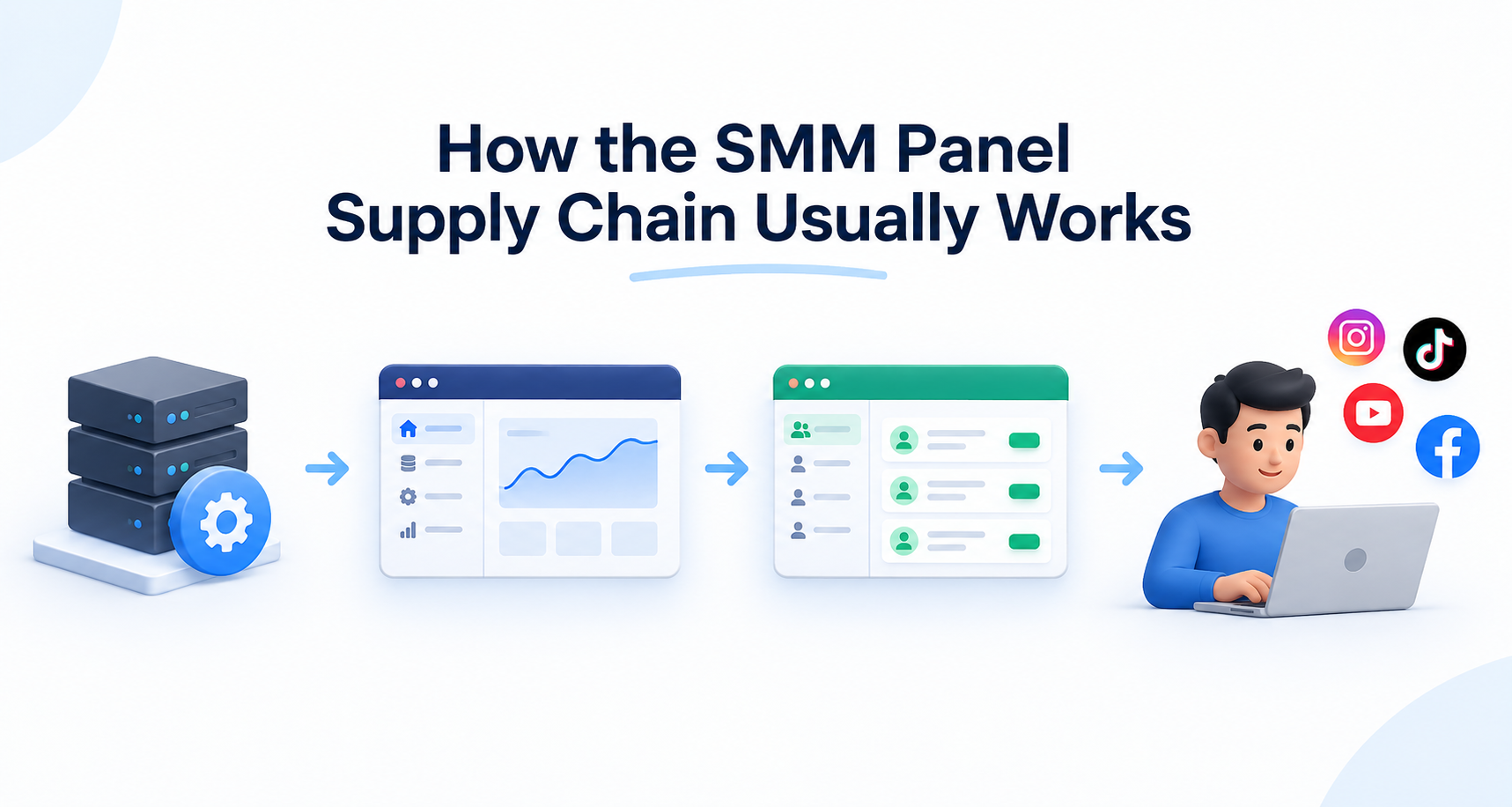
An SMM order may pass through more than one provider before it reaches the customer. A simple setup can look like this:
Service Source → Main Provider → Reseller Panel → Customer
For example, a main provider may offer an Instagram service at $0.50 per 1,000 units. A reseller can connect to that service through an API and sell it for $0.70 or $0.90.
That extra cost can cover payment fees, customer support, website costs, refunds, and other business expenses. Customers may still choose the reseller if it offers easier payments, clearer service details, faster support, or a simpler ordering process.
Is a Main Panel Always Cheaper?
Not always. Main panels can sometimes offer lower prices because there are fewer middlemen involved, but a lower rate does not automatically mean a better deal.Before choosing a service, look beyond the price. Check the delivery speed, refill period, minimum order, targeting options, and cancellation terms. Two services may look almost identical but perform very differently.
For example, a $0.30 service may seem attractive at first, but if delivery is unstable or there is no refill support, a $0.50 option with clearer terms and more reliable delivery may offer better value.
Does a Main Panel Provide Better Quality?
The phrase “main provider” does not guarantee premium quality. Service quality depends on the source, how well the panel monitors its services, and how quickly it handles problems. A main panel may have more direct control, which can make troubleshooting easier.
A reseller can also provide good service by working with several providers and choosing suitable sources for different platforms. One provider may work better for Instagram, while another may be stronger for TikTok or Telegram. What matters most is how well the panel manages the services it sells.
Pricing Differences Between Main and Reseller Panels
Price is often one of the first things people notice. Main panels usually offer lower wholesale rates because they handle larger order volumes and work closely with resellers.
Resellers add their own margin before selling the service to customers. Some keep that margin small, while others charge more for better support, easier payment options, or extra account help.
For agencies and high-volume buyers, even a small price difference can add up over time. For occasional users, paying a little more may still be worth it if the panel offers reliable support and a smoother buying experience.
API Access and Automation
API access matters a lot for resellers and agencies that handle many orders. It lets a panel connect with another website or system and automate tasks such as importing services, placing orders, checking order status, tracking balances, and managing supported refill or cancellation requests.
Without an API, a reseller may need to process orders manually. That can work at a small scale, but it becomes difficult once order volume starts growing.
If you plan to run an SMM reselling business, check the API documentation, uptime, service updates, error handling, and order tracking before choosing a provider. These features matter far more than impressive claims on a homepage.
Reseller Panel vs Child Panel: Are They the Same?
A reseller is the person or business selling services obtained from another provider. A child panel is usually a branded customer-facing panel connected to a parent or main provider. The reseller may use its own domain, logo, service pricing, and customer interface while the parent system handles much of the underlying fulfillment.
A reseller can also build an independent website and connect several providers through APIs rather than using a traditional child panel.
So while child panels are commonly used for reselling, the two terms should not automatically be treated as identical.
Which Panel Gives You More Control?
A main panel usually has more control over its services because it works closer to the source. If a service slows down or its SMM panel pricing changes, the team may be able to check the issue directly and respond faster.
A reseller depends more on the providers behind its services. If one provider has a problem, the reseller may need to wait for an update or move the service to another source. Good reseller panels reduce this risk by working with backup providers instead of depending on just one.
What Happens When an Order Has a Problem?
Order problems can show the difference between a main panel and a reseller. A main provider can often check the issue directly, whether it involves slow delivery, a refill request, or a service that has stopped working.
A reseller usually has one extra step. The customer contacts the reseller, and the reseller then checks with the provider if needed. This can take longer, but a reseller with quick support and reliable providers may still solve problems faster than a large panel with slow customer service. In the end, good support matters more than the panel type. Look at response time, clear policies, and how well the team handles real order issues.
Main Panel Advantages
Choosing a genuine main provider can offer several advantages, particularly for high-volume buyers and resellers. These may include lower wholesale rates, closer access to service sources, stronger API infrastructure, greater control over order processing, and fewer layers between the buyer and provider.
Main providers can also be useful when a business wants to connect its own SMM panel through an API and manage thousands of customer orders automatically. The trade-off is that some wholesale-focused providers may put less effort into beginner-friendly dashboards, local payment methods, or individual customer support.
Reseller Panel Advantages
Reseller panels have their own strengths. A good reseller can make the buying process easier by selecting services from different providers, simplifying service descriptions, offering regional payment options, and providing support in the customer’s preferred language.
This can be particularly useful in Bangladesh, where digital payments are widely used for everyday transactions. According to the World Bank’s Global Findex, digital financial services have become an important part of how people access and use financial services. For local SMM customers, familiar payment options can make adding funds and placing orders more convenient.
A reseller can also remove weak services from its catalog and replace them with better alternatives from another supplier, so customers do not have to search for a new provider themselves.
What Are the Risks of Using a Reseller Panel?
The biggest risk is provider dependency.If the upstream provider experiences downtime, changes a service, increases prices, or removes an API connection, the reseller can also be affected.
Multiple reseller layers can create another problem.
For example:
Customer → Reseller A → Reseller B → Provider
Every additional layer may increase the price and make troubleshooting more complicated. This is why extremely large service catalogs and very cheap rates should not automatically be treated as evidence of a direct provider relationship.
Another risk is unclear service information. If a reseller simply imports hundreds or thousands of services without reviewing them, customers may see outdated descriptions, duplicate services, or inaccurate delivery information.
How Can You Tell Whether a Panel Is a Reseller?
There is no single way to confirm that a panel is a reseller. If several websites use very similar service names, IDs, descriptions, or prices, they may be sourcing services from the same provider. Panels offering a very large range of SMM panel services may also work with multiple sources rather than managing every service directly.
That alone is not proof, as many panels use a mixed setup. Instead of focusing only on the “main” or “reseller” label, check how clearly the panel explains its services, pricing, refill terms, and support. These details give you a better idea of what you are actually buying.
What Should You Check Before Choosing Either Type?
Before adding a large balance or connecting your business through an API, take some time to check how the panel actually works.
- Read the service descriptions carefully and make sure the terms are clear.
- Compare prices, but do not assume a “main provider” will always be the cheapest.
- Check the refill, refund, cancellation, and privacy policies.
- Contact support with a real question and see how quickly they respond.
- Start with a small order before spending more.
- If you plan to automate orders, review the API documentation first.
- Check payment methods, deposit fees, and any extra charges.
- Avoid keeping a large balance in a panel you have not tested yet.
- Review the rules of the social platform before using any service.
A good panel should make it easy to understand what you are buying and what happens if something goes wrong. Clear terms, reliable support, and consistent service matter more than whether the website calls itself a main panel or a reseller.
Main Panel or Reseller Panel: Which Is Better for Personal Use?
For personal use, the difference between a main panel and a reseller panel usually matters less. If you only place a few orders, it makes more sense to focus on clear service details, fair pricing, easy payments, and helpful support.
If a reseller gives you a smooth ordering experience and handles problems properly, there is no real need to search for the original provider just to save a small amount. For most small users, convenience and reliability matter more than getting the lowest wholesale price.
Which Is Better for Agencies?
Agencies have different requirements.They may manage campaigns for multiple clients and place orders regularly. At that point, pricing, API access, order history, service stability, account management, and support become much more important.
A reliable main provider can be valuable because the agency gets closer to the supply source and may receive better pricing at higher volumes. A strong reseller can still be suitable when it offers better service curation, local payment options, or support. Agencies should calculate the total operational value instead of comparing rate cards alone.
Which Is Better for Starting an SMM Reselling Business?
If you want to launch your own SMM panel, you do not necessarily need to become a main provider immediately. Building direct infrastructure, finding reliable suppliers, maintaining APIs, monitoring services, processing large volumes, and handling technical problems require more resources.Starting as a reseller can reduce that initial complexity.
You can connect an established provider through an API or launch a branded child panel, set your own prices, attract customers, and learn which services are actually in demand.
As the business grows, you can add additional providers and gradually reduce dependency on any single source. For many new operators, this is more practical than trying to build a full provider network from day one.
Do More Services Mean a Better Panel?
A panel with 10,000 services is not automatically better than one with 1,000 carefully managed services. Large catalogs can create duplicate options and make it difficult for customers to understand which service fits their needs.
Service quality, accurate descriptions, useful filters, competitive pricing, and reliable support often matter more than the raw number of services available.
For resellers, a smaller catalog of tested services can also reduce refund requests and customer confusion.
Can You Trust “Main Provider” Claims?
Do not trust a “main provider” claim just because it appears on a website. There is no official organization that certifies SMM panels as main providers, so it is better to look at how the panel actually operates.
A reliable provider usually shows its value through stable services, clear policies, useful API features, wholesale options, and consistent order support. Be careful with claims such as “100% main provider,” “zero drop,” “permanent,” or “guaranteed results” when the website does not clearly explain what those terms mean or what conditions apply.
Platform Policies Still Matter
Whether you purchase from a main panel or reseller does not override the rules of the social network involved.
For example, YouTube's current Fake Engagement Policy states that artificially increasing views, likes, comments, or other metrics can violate its rules, and actions taken by a third party hired by a creator can still affect the channel.
Users should therefore review the policies of each social platform and avoid assuming that a service is automatically risk-free simply because a panel describes it as “safe,” “real,” or “premium.”
Reseller Panel vs Main Panel: Final Verdict
The main difference between a reseller panel and a main panel is how close each one is to the service source. A main panel usually works more directly with providers, handles larger order volumes, and may supply other panels through an API. This can give it more control over pricing, service updates, and order management.
A reseller panel buys services from another provider and sells them to its own customers. The price may be slightly higher, but the reseller can still add value through better support, easier payment options, local service knowledge, and a simpler buying process. For agencies, high-volume buyers, or anyone running their own SMM panel, a reliable main provider may offer better pricing and more control. For individual users and small businesses, a good reseller can be just as practical.
Instead of choosing a panel based only on the “main” or “reseller” label, compare the pricing, service terms, support, payment options, API features, and overall reliability. Those details will give you a much clearer picture of which panel is the better choice.
Frequently Asked Questions
What is the main difference between a reseller panel and a main panel?
A main panel generally operates closer to the original service supply chain and may provide services to other panels. A reseller purchases services from an upstream provider and sells them to its own customers, usually at a markup.
Is a reseller SMM panel more expensive?
It can be because the reseller needs to add a profit margin. However, this is not always the case. Prices depend on provider rates, competition, service quality, payment costs, and the reseller's pricing strategy.
Are main SMM panels always better?
No. A main panel may offer lower prices and greater service control, but customer experience depends on support, service management, policies, payment options, and reliability. A well-managed reseller can sometimes provide a better overall experience.
Can a reseller panel have an API?
Yes. A reseller may connect to upstream providers through APIs and can also offer API access to its own customers. This can create multiple levels in the supply chain.
What is a child SMM panel?
A child panel is usually a branded SMM website connected to a parent provider's infrastructure. The child panel owner can present the business under their own brand and pricing while relying on the parent system for service fulfillment.
How do I know whether an SMM panel is a main provider?
There is no guaranteed test based only on the website. Check its API infrastructure, wholesale features, service management, pricing patterns, policies, support, and reseller capabilities. Avoid relying entirely on “main provider” claims.
Should I choose a main panel if I want to become an SMM reseller?
A reliable main provider can be a useful choice because lower base pricing, API access, and high-volume infrastructure can improve reseller margins. However, provider reliability and service quality should be tested before connecting your entire business to one source.
Can a reseller use multiple main providers?
Yes. Many reseller businesses can connect to multiple providers and use different sources for different services. This can reduce dependency on one supplier and give the reseller more flexibility when pricing or service availability changes.
Which is cheaper: a reseller panel or a main panel?
Main panels may offer lower wholesale rates because there are fewer intermediary margins. However, the cheapest rate does not necessarily provide the best value. Service conditions, refill terms, reliability, support, and payment costs should also be compared.
Which one should beginners choose?
Beginners buying services for their own use should focus on clear descriptions, support, payment convenience, and transparent policies rather than worrying too much about whether the website is a reseller. Anyone starting an SMM reselling business should pay more attention to API access, wholesale rates, provider stability, and backup service sources.